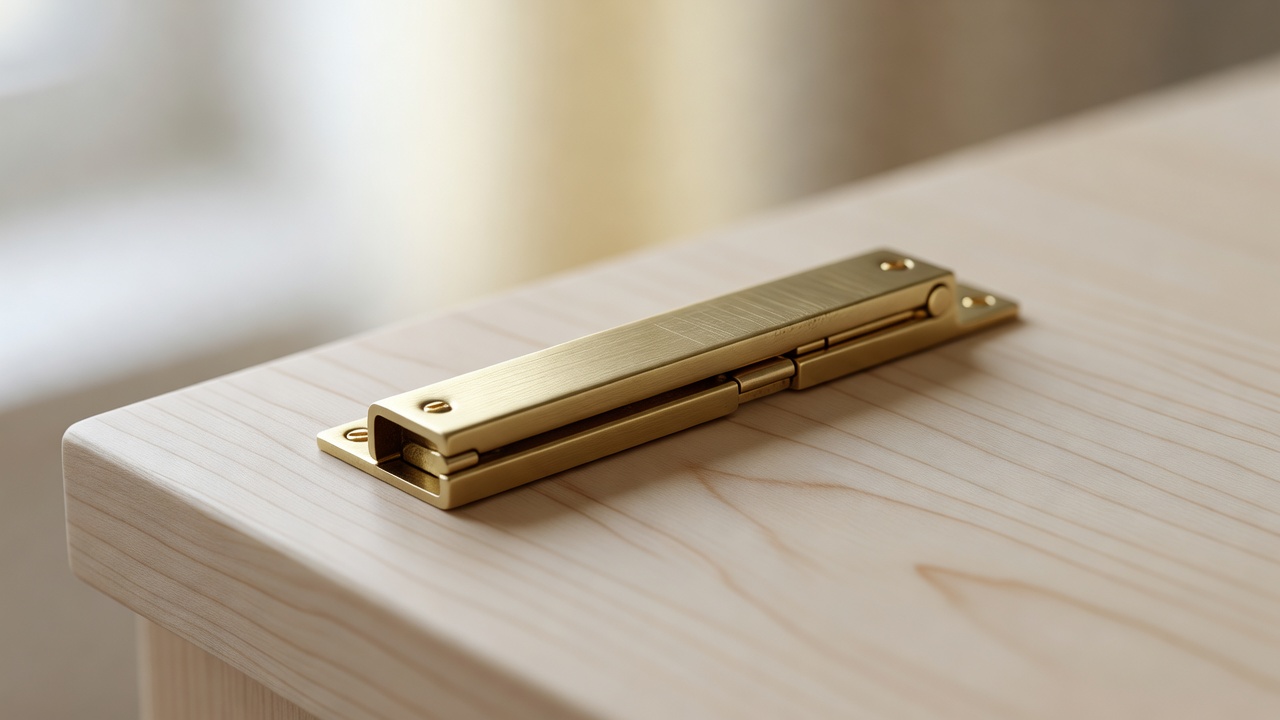
The bed as a verb
Before the bed was a noun in the middle of the room, it was a verb. In Japanese homes the futon was folded each morning and slid into an oshiire closet, returning the floor to the tatami and to the day. Ship's cabins did the same with berths and bunks. The Murphy bed, patented by William Lawrence Murphy in San Francisco in the early 1900s, brought the idea to the city apartment: a mattress that stands up against the wall and lets the room change its mind.
That is the whole philosophy of this chapter. A studio does not need less furniture so much as furniture with a second shift. The bed works at night; something else should work by day.
Four quiet answers
The wall bed
A mattress on a frame that folds up into a cabinet, returning between a third and a half of the floor each morning. It must be fixed into studs or masonry by someone who knows how, so ask your landlord first.
Note: closed depth commonly sits between 30 and 45 cm; check mattress thickness against the cabinet before ordering. Vertical-fold models need a ceiling a little taller than the mattress length; side-fold models suit lower ceilings.The sofa bed
The most common answer and the most often regretted. The mechanism matters more than the upholstery: a click-clack back that lies flat is gentle on the room; a pull-out frame with a thin mattress is gentle on nobody. Sit on it for ten minutes, then lie on it for ten more.
Note: test the opened length; 190 cm or more suits most adult guests.The storage platform bed
A bed set on deep drawers or lift-up gas struts, which keeps bedding, off-season clothes and suitcases where a plain frame would only keep dust. It does not fold, but it gives back the volume beneath it.
Note: gas-strut lifts are rated by mattress weight; match the rating to your mattress.The daybed with trundle
A sofa by day, a single bed by night, and a second bed that rolls out from underneath when someone stays over.
Note: confirm that the trundle clears your rug; a high pile will catch.
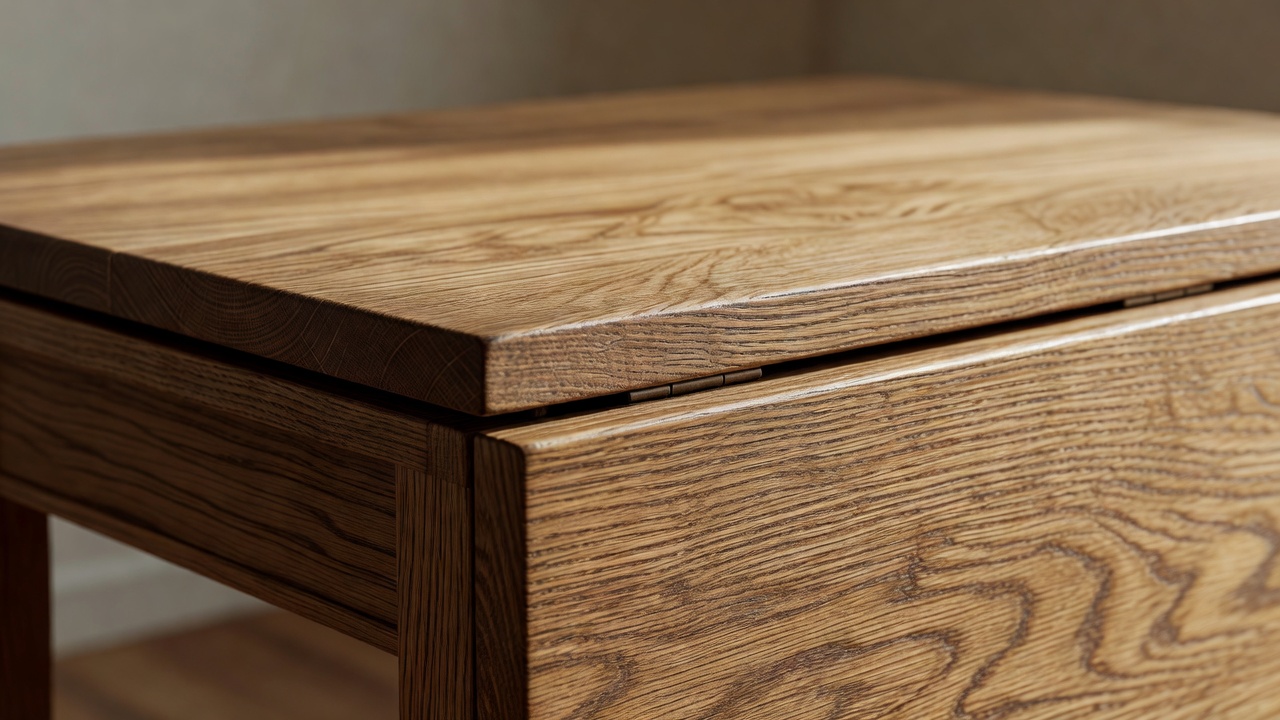
The table that goes into hiding
The bed is the large problem; the table is the daily one. A gateleg or drop-leaf table, a tradition older than the studio itself, is narrow enough to stand against a wall as a console with its leaves down, and can seat four with them raised. A wall-mounted fold-down desk does the same for work, and vanishes at six o'clock.
Chairs, too, can learn to retire. The Shakers hung theirs from a peg rail running around the room at head height, so that a chair became part of the wall rather than part of the floor. Alvar Aalto's Stool 60, designed in 1933, stacks into a column and serves as a seat, a side table and a step.
Drop-leaf or gateleg table
Dinner for four, then a console again.
Note: check that the swinging leg support is sturdy and that the hinges are screwed, not stapled.Peg rail and folding chairs
Chairs hang flat against the wall when they are not in use.
Note: a wooden peg rail should be fixed into studs, not into plasterboard alone.
The room should change its mind quietly, not announce it.
Three tests before you buy
The morning test: can you convert the room in under two minutes, half awake? If it takes longer you will stop doing it, and the bed will remain a bed all day. The guest test: does the second bed need a screwdriver or an instruction sheet? The Tuesday test: on an ordinary evening with the bed hidden and nothing else moved, is there a clear path of roughly 80 cm from door to window?
If a piece fails any of the three, it is not an answer, only a beautiful obstacle. Measure the room, measure the piece folded and unfolded, and mark both outlines on the floor with tape for a week. It is the cheapest way we know of to learn what a purchase will feel like.
A final practical word: anything that stands up or pulls down on a wall carries real weight. Use the fixings supplied, follow the manufacturer's instructions, and have a professional install anything of size. This site gives editorial ideas, not structural advice.